Gabion
Overview
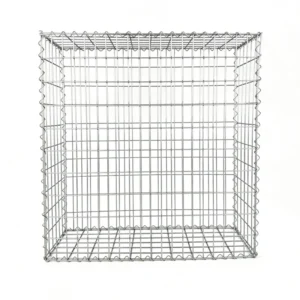
Gabion products are wire mesh structures designed to be filled with stone, soil, sand, or other suitable filling materials. According to different structural designs and application requirements, they are mainly manufactured using welded or twisted mesh construction.
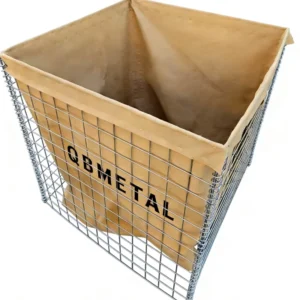
QB METAL supplies Welded Gabions, Woven Gabions, and Defensive Barriers for retaining walls, slope stabilization, riverbank and channel protection, erosion control, flood protection, landscaping, perimeter security, and military defense applications. Wire diameter, mesh size, dimensions, surface treatment, geotextile liner, and connection methods can be customized according to project requirements.
FAQ
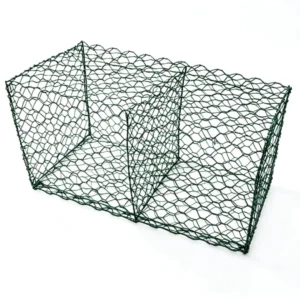
Welded gabions are made from rigid welded wire mesh panels, providing accurate dimensions, uniform mesh openings, and a neat appearance. Woven gabions are manufactured from twisted hexagonal wire mesh and provide greater flexibility, allowing the structure to better adapt to uneven ground, settlement, and hydraulic environments. The appropriate type depends on the installation conditions and engineering requirements.
Diaphragms are commonly installed inside longer gabion boxes to divide the structure into smaller compartments. They help limit the movement of filling material, maintain the shape of the gabion, and improve overall structural stability during installation and long-term service. The number and spacing of diaphragms should be determined according to the gabion dimensions and project requirements.
A defensive barrier is typically constructed from heavy-duty welded wire mesh panels, spiral connectors, and a geotextile liner. The structure is open at the top and bottom, without a base panel or lid, allowing it to be rapidly deployed on site and filled with soil, sand, or gravel. Compared with conventional gabions, which are mainly used for retaining, slope protection, and hydraulic applications, defensive barriers are designed with greater emphasis on rapid deployment, structural stability, and protective performance. They are commonly used for military defense, perimeter security, blast protection, temporary fortifications, and flood control.